


You are currently viewing a placeholder content from YouTube. To access the actual content, click the button below. Please note that doing so will share data with third-party providers.
More Information
Organic Battery Days 2026
The Organic Battery Days 2026 will take place from 5 to 7 October 2026 in Jena with support from HIPOLE Jena.
The international conference will bring together experts from science, research and industry to discuss the latest developments in electrochemical energy storage based on organic active materials.
Explore the scientific programme, invited speakers, registration details and abstract submission information.
Check out our recent updates
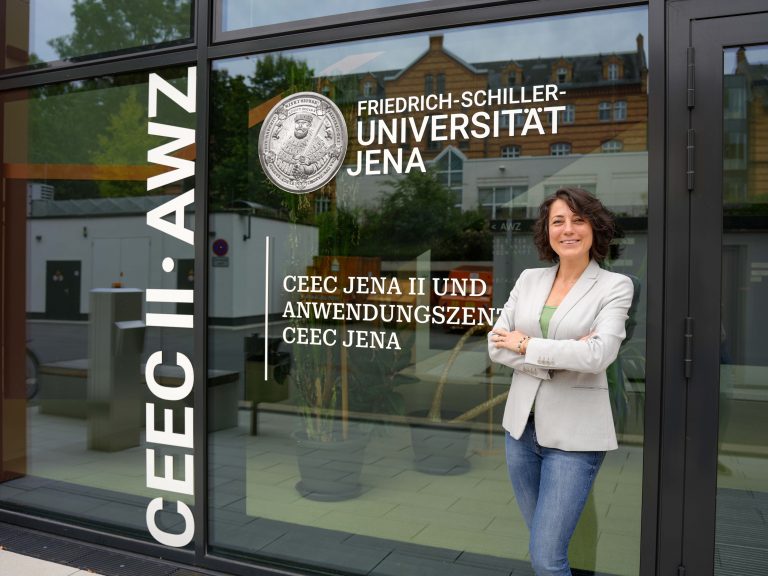
Prof. Dr. Hatice Mutlu visits the HZB
Prof. Dr Hatice Mutlu is the new Professor of Sustainable Polymer Chemistry at HIPOLE Jena, the Helmholtz Institute for Polymers in Energy Applications. Since 15 June 2026, she has strengthened…
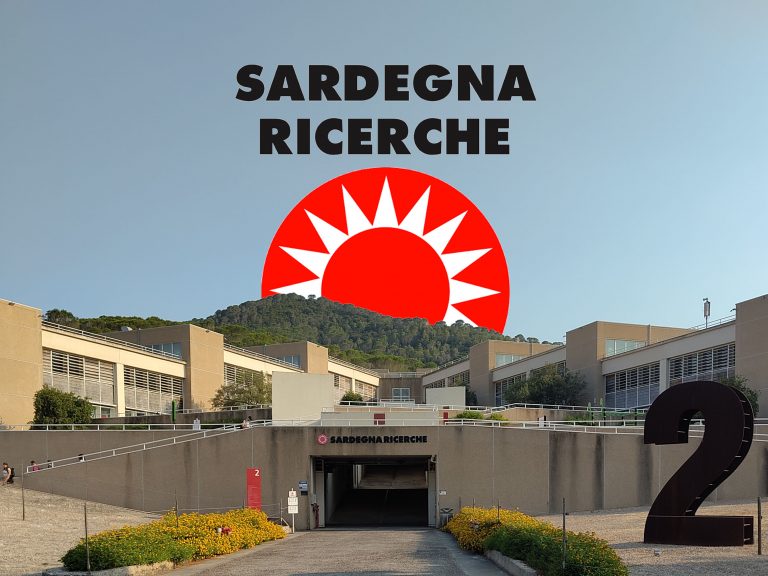
A week of molecular modelling, scientific exchange and Sardinian summer
Dr. Wenbo Dong, Dr. Daria Stepaniuk and Diego Bitzenhofer Betolaza had the opportunity to travel to Pula, Sardinia, to attend the NGMM2026 – Next-Generation Molecular Modeling 2026 Summer School: Bridging…

The Organic Battery Days 2026 will take place from 5 to 7 October 2026 at the Center for Energy and Environmental Chemistry Jena (CEEC Jena) of Friedrich Schiller University Jena,…
Job offers
-
Postdoc (m/f/d) for Polymer and Colloid Characterization at HIPOLE Jena

-
Postdoc (m/f/d) for automated polymer research at HIPOLE Jena



-
Postdoc (m/f/d) for organic / polymer-based redox-flow-batteries at HIPOLE Jena
-
Postdoc (m/f/d) for Reactor Design for Energy-Efficient CO₂ Capture by Electric Swing Adsorption at HIPOLE Jena
-
Postdoc (m/f/d) for Theoretical Chemistry of Polymers in Energy Applications at HIPOLE Jena
-
PhD student (m/f/d) for Synthesis and Characterization of Redox-Active Polymers at HIPOLE Jena
-
PhD student (m/f/d) in Theoretical Chemistry of Polymers in Energy Applications at HIPOLE Jena
-
Talents Community – Postdoc, PhD Student (f/m/d) for Polymers in Energy Applications at HIPOLE Jena
-
Talents Community – Technician (m/f/d) at HIPOLE Jena
The central strategic goal of HIPOLE Jena is the accelerated, knowledge-based development of sustainable polymer materials for scalable energy technologies.
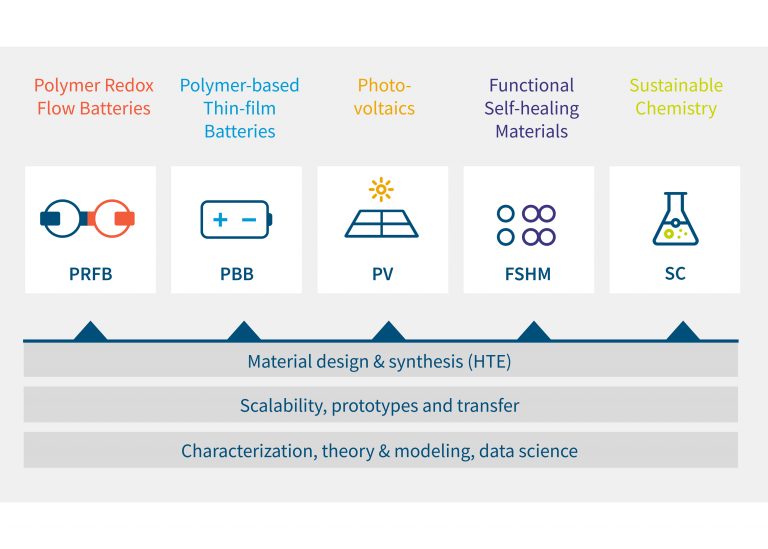
HIPOLE Jena is based on three research pillars:
- Material design & synthesis
- Scalability, prototypes, and transfer
- Characterization, theory & modeling and data science
This triad forms the basis for 5 areas of the HIPOLE Jena research mission:
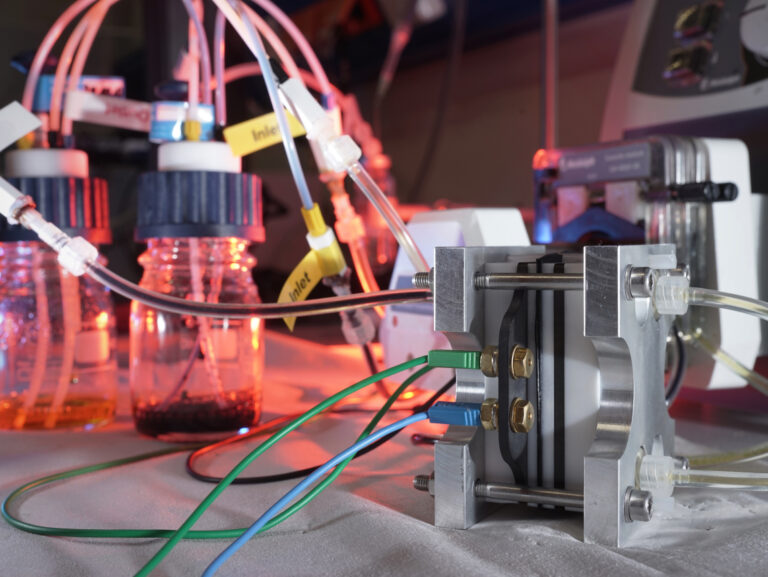
Polymer redox-flow batteries
Redox-flow batteries (RFB) are a special battery technology. In contrast to many other battery systems, with RFB the performance and capacity can be scaled independently of each other. RFBs are particularly interesting for stationary energy storage. As part of HIPOLE Jena, organic, polymer-based electrolytes are being investigated, which makes the use of critical metals/metal ions in the electrolytes obsolete.
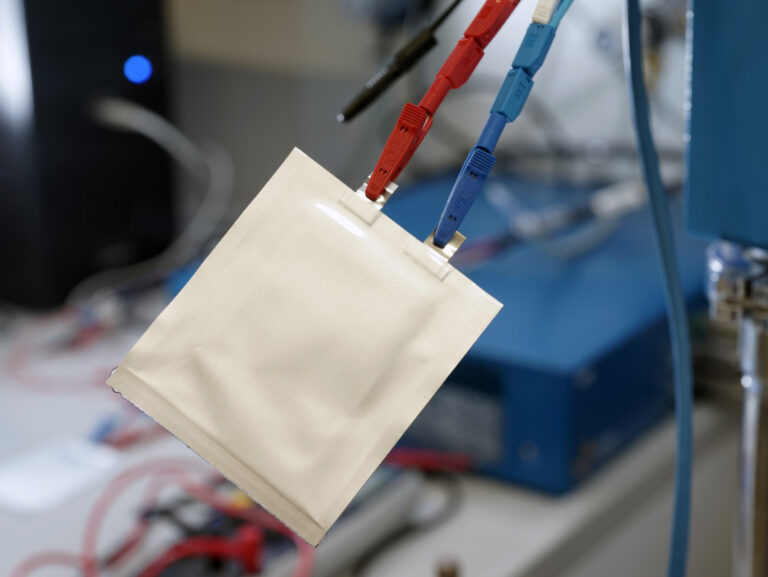
Polymer-based thin-film batteries
The large area of organic electronics opens up many new application possibilities, such as in the area of smart textiles or the “Internet of Things”. In this context, polymer-based active materials and electrolytes allow the printing production of flexible, tailor-made batteries. In HIPOLE Jena, the next generation of these materials is being investigated, which should, for example, enable a longer lifespan.
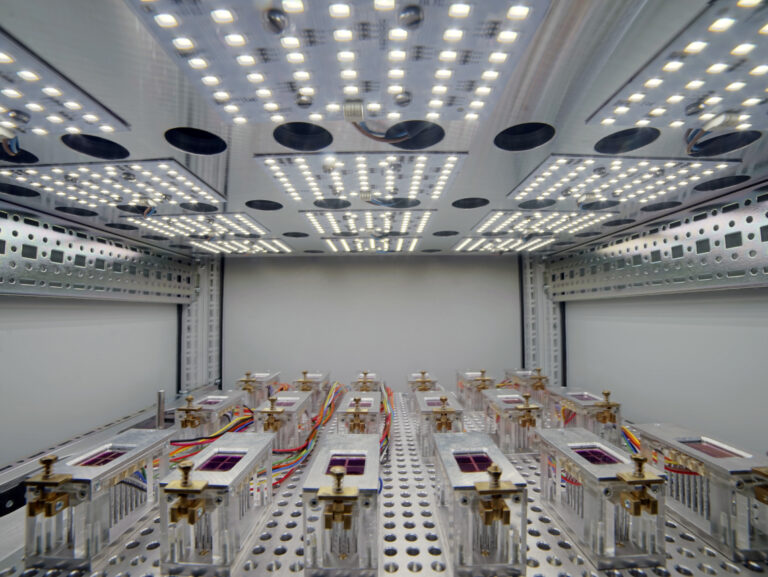
Photovoltaics
Commercial photovoltaic technologies have reached the terawatt (TW) range in terms of installed capacity worldwide. There will continue to be a very high demand for photovoltaic systems in the next few years, requiring scalable technologies to meet the ever-growing demand. HIPOLE Jena is dedicated to perovskite solar cells. The use of polymers is intended to improve stability, for example.
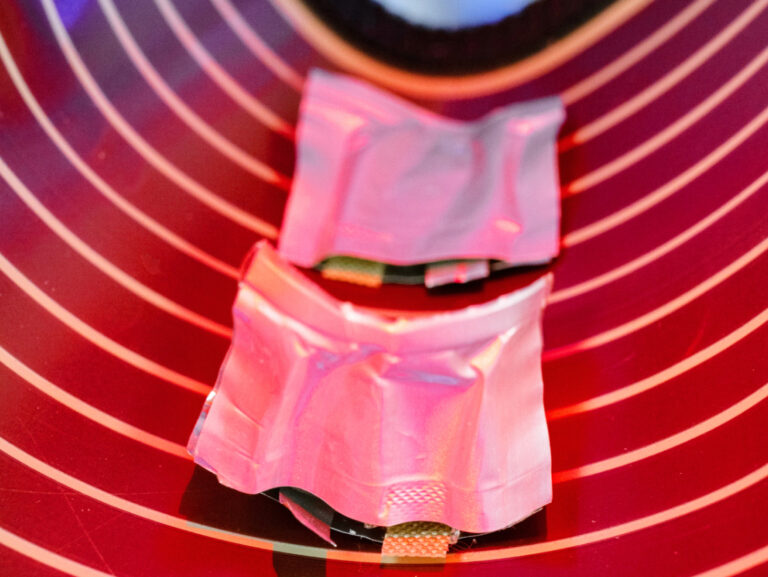
Functional self-healing materials
Functional self-healing materials represent a special field of research. These can restore their original properties after damage. For example, in battery electrodes, the conductivity should be restored after damage to the electrode. Comparable approaches should also be used for solar cells.
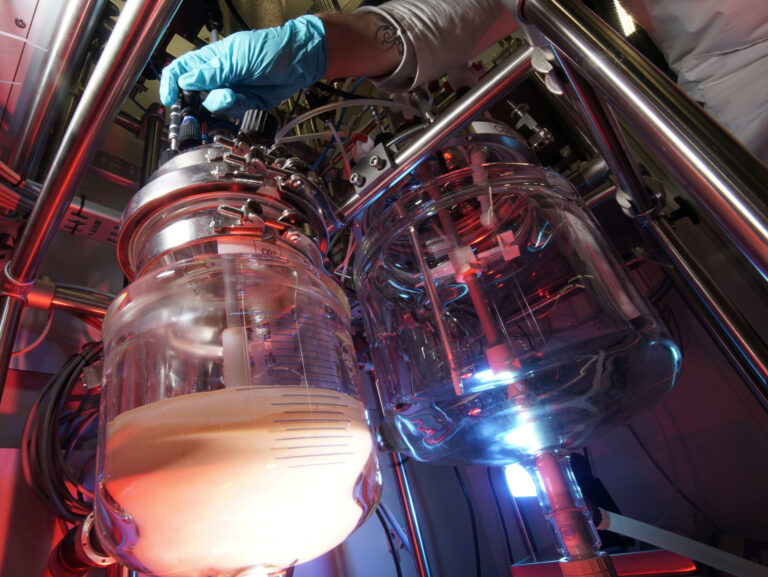
Sustainable chemistry
In the plastic age, which is also strongly associated with the negative environmental impacts of plastics (e.g. microplastics), sustainability plays an important role. Therefore, the polymers for the various applications should be created based on sustainable resources and their recycling should be possible. For example, the use of CO2 as a building block for polymers plays an important role.